
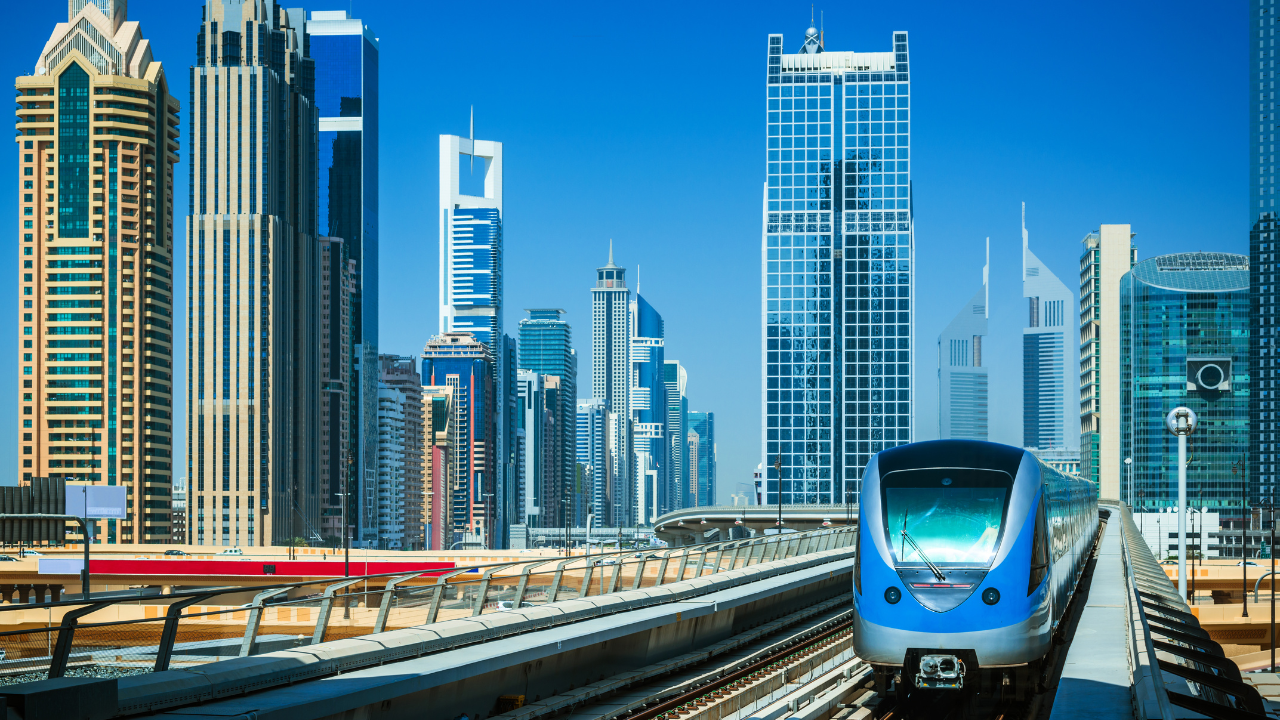

You land at Dubai International Airport, Nol card freshly loaded, and twenty minutes later, you’re standing at BurJuman, the city folding in on itself around you. To the north, the glass towers of Sheikh Zayed Road. To the south, the wind-tower silhouettes of Al Fahidi. You are exactly in the middle, which is precisely the point of this station.
- What Makes BurJuman Different From Every Other Station
- BurJuman Metro Station Timings in 2026
- Navigating the Transfer: Red Line to Green Line (and Back)
- The Exits: Which One to Use
- Your Nol Card: The Only Way to Travel Here
- Getting to Key Destinations From BurJuman
- Dubai International Airport (Terminals 1 and 3)
- Dubai Mall and Burj Khalifa
- Al Fahidi Historical District
- DMCC / JLT (Jumeirah Lakes Towers)
- Mall of the Emirates
- Gold Souk / Deira
- What’s Around the Station on Foot
- Accessibility at BurJuman
- Things the Other Guides Get Wrong
- What’s Changing in 2026
- Frequently Asked Questions
- A Few Practical Notes Before You Go
BurJuman is not just a stop. It is the only underground interchange on Dubai’s metro network where the Red and Green Lines cross beneath a shopping mall — a architectural fact that most guides mention in passing but none fully explain. Understanding how that intersection works, and what it unlocks for your journey, is the difference between a smooth commute and fifteen wasted minutes on the wrong platform.
This guide was written for the person who actually needs to get somewhere.
What Makes BurJuman Different From Every Other Station
Dubai Metro has two interchange stations: Union in Deira and BurJuman in Bur Dubai. That’s it. Of the 53 stations across the entire network, only two allow you to switch lines without leaving the paid zone, re-tapping, or paying again.
The station sits below BurJuman Shopping Centre at the intersection of Sheikh Khalifa bin Zayed Street and Khalid bin Al Waleed Road. Both streets are major arterials, which means taxis, buses, and rideshares can reach you from almost any direction without fighting one-way obstructions.
The station codes tell you exactly where you are in the network:
- Red Line: R19 — Fare Zone 6
- Green Line: G26 — Fare Zone 6
The Red Line connects to major destinations including Dubai Mall, Mall of the Emirates, and Dubai International Airport. The Green Line links to historic and cultural hubs such as Al Fahidi, Dubai Healthcare City, and Al Ras.
That combination is what makes BurJuman the crossroads of old and new Dubai. One line takes you to the Burj, the other takes you to the creek.
BurJuman Metro Station Timings in 2026
Weekdays (Saturday to Thursday): Metro service runs between 5:00 AM and 12:00 AM. On Fridays, service begins at 1:30 PM and runs until 12:00 AM. This Friday’s timing catches visitors off guard more than any other detail — plan accordingly if you have an early-afternoon connection.
Trains come every 3 to 4 minutes during peak hours. When off-peak, the interval between trains is approximately 6 to 8 minutes.
Peak hours at BurJuman run roughly 7:30–9:30 AM and 5:00–7:00 PM on weekdays. If you’re making a line transfer during those windows, budget an extra 10 minutes. The corridors fill quickly, and escalators occasionally queue up.
For real-time departures, especially before public holidays when the RTA adjusts schedules — the S’hail app is the only source worth trusting. The printed timetables posted on platforms reflect standard days, not exception days.
Navigating the Transfer: Red Line to Green Line (and Back)
This is the question most guides answer poorly, so let’s be specific.
Get off at BurJuman Station. Follow the clear signs for “Red Line” or “Green Line”. Use escalators or elevators to reach the connecting platform. There is no need to exit the station or re-tap your Nol card. Transfer time usually takes 3–5 minutes.
The two line platforms are on separate levels, connected by escalators and a wide internal corridor. Color-coded signage — red arrows for the Red Line, green for the Green — runs along the ceiling and walls. Follow the ceiling signs, not the floor arrows; the floor markings in high-traffic sections wear off and get confusing.
One thing guides don’t mention: during peak hours, the corridor between lines has a natural bottleneck near the escalator bank. If you’re carrying luggage or traveling with children, take the elevator on the far left side of the paid zone — it bypasses the main foot traffic entirely.
The Exits: Which One to Use
BurJuman has four numbered exits, and choosing the wrong one adds a five-minute outdoor walk in Dubai’s heat when you could have been indoors.
Exit 1 — BurJuman Mall (Indoor Access) The station connects directly to BurJuman Mall through an underground passage. The exits of the station lead directly into BurJuman Mall — they are connected underground. The station sits right below the mall, making the walking distance effectively zero. Use this exit for the mall, cinema, food court, or to access the taxi drop-off on the mall’s ground floor without going outside.
Exit 2 — Commercial District and Hotels Vasantam Hotel and City Seasons Towers Hotel are within 0.2 km, and Park Regis Kris Kin Hotel is within 0.3 km of this exit. Exit 2 faces the main commercial blocks on Khalid bin Al Waleed Road — useful for offices, mid-range hotels, and the cluster of South Asian restaurants that line the street toward Meena Bazaar.
Exit 3 — Al Fahidi, Dubai Creek, and Cultural Dubai Exit 3 is ideal for tourist attractions such as the Dubai Museum and direct access to Al Fahidi. It deposits you onto Khalid bin Al Waleed Street, from which it’s a 12–15 minute walk to the Al Fahidi Historical Neighbourhood — or a 5-minute bus ride using one of the RTA feeders parked outside.
Exit 4 — Al Karama and Residential South Exit 4 is convenient when moving towards Al Karama, an area characterized by busy markets and stores. This is the local’s exit — almost no tourists use it, which means it’s also the quietest and fastest to move through.
Your Nol Card: The Only Way to Travel Here
Cash is not accepted anywhere in Dubai’s metro. You tap in, you tap out — and if your card balance falls below the minimum zone fare, the gate won’t open.
Always keep at least AED 7 on your card. If you fall short, you may pay a fine. For visitors, the Nol Red ticket offers up to six single trips at a lower cost — pick it up at customer service desks and return it before you leave the city to get your deposit back.
For anyone staying more than a few days, the Silver Nol card is more practical. It holds up to AED 1,000, works on metro, bus, tram, and water bus, and never expires. Fares depend on zones traveled, starting as low as AED 3. Most cross-city trips from BurJuman fall into the AED 5–8 range depending on how far you go.
Bus transfers within 30 minutes of exiting the metro are free with a Nol card. This is one of the most underused features in the entire system — if you’re heading toward Al Seef or Al Fahidi, take the metro to BurJuman and catch the feeder bus rather than paying for a taxi.
Getting to Key Destinations From BurJuman
Dubai International Airport (Terminals 1 and 3)
Stay on the Red Line heading toward Airport Terminal 3. It’s about 15–20 minutes by metro from Terminal 1 or Terminal 3. No transfer needed — BurJuman is on the same Red Line corridor.
Dubai Mall and Burj Khalifa
Red Line toward UAE Exchange direction, exit at Burj Khalifa/Dubai Mall station. Journey time is roughly 8–10 minutes from BurJuman.
Al Fahidi Historical District
The fastest way is by taxi, which takes about 3 minutes. By metro, take the Green Line one stop to Al Fahidi Metro Station — the journey takes approximately 4 minutes. The bus option from the stop outside Exit 3 takes around 8–12 minutes and costs AED 1–2.
DMCC / JLT (Jumeirah Lakes Towers)
Traveling from BurJuman to DMCC is simple because the journey stays entirely on the Red Line. No transfers are required, and services operate at short intervals. Expect a ride of around 40 minutes, with Nol fares typically ranging between AED 6 and AED 8.
Mall of the Emirates
Red Line, same direction as Dubai Mall, alight at Mall of the Emirates station. Around 20 minutes.
Gold Souk / Deira
Green Line toward Al Ras direction. Get off at Al Ras station, which is within walking distance of the Gold Souk, Spice Souk, and the old creek dhow wharves. Journey time from BurJuman is approximately 12–15 minutes.
What’s Around the Station on Foot
The neighborhood radiating out from BurJuman is one of Dubai’s most layered — the kind of area that rewards slow walking more than any tourist circuit does.
BurJuman Mall sits directly above you. It’s older and quieter than Dubai Mall, which is precisely its appeal on a weekday afternoon. Good food court, reliable pharmacy, a cinema, and a Carrefour for supplies.
Al Seef District is reachable on foot in roughly 20 minutes or by bus from Exit 3 in under 10. Al Seef is a waterfront destination blending traditional architecture with modern retail and dining. The creek walk at dusk is one of the city’s underrated experiences — the lights reflect off the water and the old dhows are still moored there, functioning freight vessels among the cafe tables.
Al Fahidi Historical Neighbourhood is Dubai before the skyscrapers. The wind towers — the original air conditioning — are still standing, the lanes narrow enough that two people can barely pass. The Dubai Museum inside Al Fahidi Fort gives you the full arc: from pearl-diving fishing village to the city you arrived in.
Dubai Creek is 15–20 minutes on foot or one Green Line stop away. It offers scenic dhow cruises and waterfront views of the city skyline. The abra water taxis across the creek to Deira cost AED 1 and are one of the last genuinely cheap, genuinely old things left in Dubai.
Meena Bazaar runs along the streets south of the mall — dense with textile shops, jewelers, and the kind of restaurants that don’t bother with menus in English because the regulars never need them. Pakistani, Indian, Filipino, Sri Lankan food, all at prices that will confuse you after eating anywhere near Downtown.
Accessibility at BurJuman
The station has elevators, ramps, and tactile guidance paths for people with disabilities. Every exit has an elevator option alongside the escalators, and the internal transfer corridor between lines is wide enough to navigate with a wheelchair or pram without issue.
Dubai Metro’s Women & Children carriage is at the front of every train — the first carriage when traveling in the direction of travel. Gold Class carriages require a Gold Nol card. Standard Silver and Red tickets access the same carriages as everyone else.
Things the Other Guides Get Wrong
A few recurring inaccuracies worth correcting:
“BurJuman is the only interchange station.” It isn’t — Union Station in Deira also connects both lines. Together with Union, BurJuman is among the very few stations where riders can switch between both metro lines.
“You need to exit and re-enter to change lines.” You don’t. The interchange is fully within the paid zone. This misunderstanding has sent real passengers back through the gates unnecessarily.
“Sunday hours are the same as weekdays.” They’re not. Dubai Metro typically opens at 5:00 AM Monday through Saturday, and 8:00 AM on Sundays.
“Exit 1 is for Al Fahidi.” It isn’t — Exit 1 goes into the mall. Exit 3 is the one that faces toward Al Fahidi.
What’s Changing in 2026
The RTA is rolling out digital signage improvements at BurJuman this year. Expect clearer train arrival screens and interactive maps by end of Q3. Staff will also use wearable scanners to speed up gate checks during peak hours. Long-term, the Green Line extension toward Academic City will push more trains through BurJuman, so platform extensions are planned for 2026.
This is relevant if you travel through regularly — the construction phases during platform extension work will create temporary congestion near the Green Line platform. Off-peak hours will be smoother than usual during that period.
Frequently Asked Questions
Can I take a large suitcase on the metro?
Luggage allowance is up to two pieces per passenger — one large piece (max 81 × 58 × 30 cm) and one carry-on (max 55 × 38 × 20 cm). Anything beyond that needs a taxi.
Is there parking near BurJuman Metro?
Paid parking is available in BurJuman Mall and on surrounding streets. The mall charges by the hour; nearby street parking is metered. It’s worth parking once and using the metro rather than driving across the city.
What is the best exit for BurJuman Mall specifically?
Exit 1 deposits you directly into the mall’s lower level. You don’t go outside at any point.
Are there food options inside the station?
Various shops and food stalls are located nearby, offering snacks, drinks, and other essentials. The concourse-level kiosks inside the paid zone carry water, coffee, and light snacks. Full dining is in the mall above.
What bus routes serve BurJuman?
Several RTA buses stop at the designated bus bays outside the station — stops labeled 2-1 and 4-1. RTA buses provide quick links from BurJuman Metro Bus Stops toward the creek side. The S’hail app lists all routes in real time; bus numbers change seasonally so confirm before traveling.
Is BurJuman the second busiest station in the network?
Since its opening, the station has served approximately 15.6 million passengers, making it the second busiest station in the Dubai Metro network.
A Few Practical Notes Before You Go
Dress modestly if you’re heading toward Al Fahidi or any of the heritage areas south and east of the station. Not because anyone will stop you, but because it’s respectful and you’ll feel less out of place in the narrow lanes.
The station gets genuinely busy on weekend afternoons — BurJuman Mall draws local families, and the transfer corridor between lines can feel narrow when two opposite crowds are moving through simultaneously. If you have flexibility, Friday mornings (before 1:30 PM, when the metro doesn’t run yet) or Tuesday evenings are the quietest windows.
Keep your Nol card in your hand before reaching the gate, not buried in a bag. The gates time out quickly and the person behind you will make their impatience audible.
And if you’re new to Dubai — BurJuman is as good a place as any to start understanding how the city is actually structured. Stand at Exit 3, look one direction, and you see a skyline. Look the other, and you see a street that hasn’t changed in fifty years. That tension is Dubai, compressed into one intersection.
BurJuman Metro Station
Dubai Metro — Bur Dubai
Line Codes
Operating Hours