
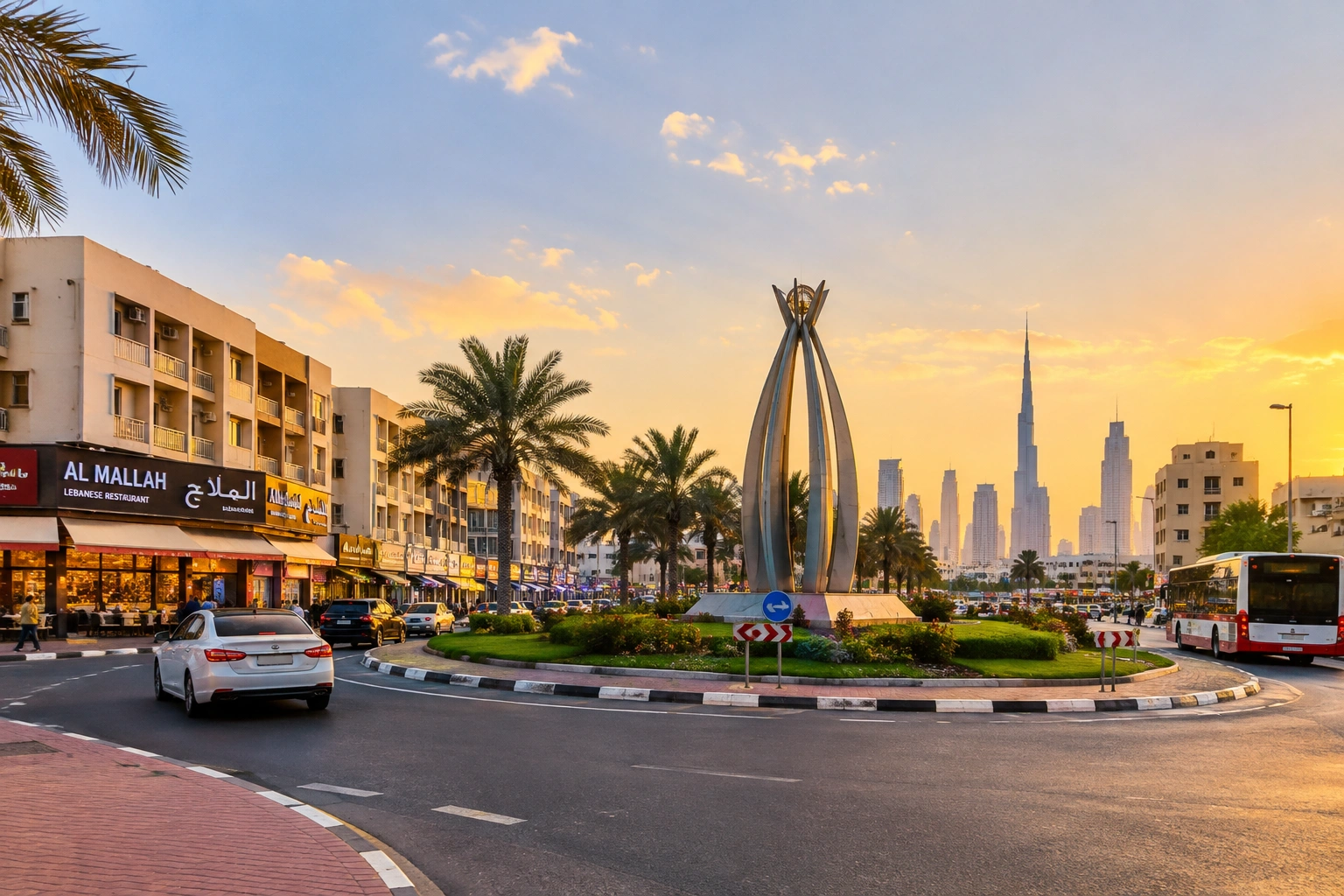

Most people who search for Satwa Roundabout are trying to get somewhere else. That’s fair. It’s a traffic junction, not a monument. But if you treat it purely as a waypoint, you’ll miss what makes the surrounding neighbourhood interesting: this is one of central Dubai’s long-established residential areas, where local shops, independent restaurants and everyday businesses still shape the streets.
- Where Satwa Roundabout Actually Sits
- What Makes Satwa Different From Other “Old Dubai” Areas
- Eat on 2nd December Street, Not Near It
- Getting There Without Overcomplicating It
- Nearby Places Worth Adding to Your Map
- One Thing Worth Knowing Before You Go
- Is Satwa Roundabout Dubai Worth Visiting?
- The Honest Verdict
This guide skips the generic list of roads and focuses on what can actually make a visit worthwhile: where to eat, how to get there, which Metro stations are useful, and what makes Al Satwa different from Dubai’s more polished tourist districts.
Where Satwa Roundabout Actually Sits
Satwa Roundabout is in Al Satwa, where Al Satwa Road connects with 2nd December Street and nearby roads leading towards Al Hudaiba and Sheikh Zayed Road.
Its central position puts it within easy reach of several well-known parts of Dubai. Jumeirah is nearby, while Sheikh Zayed Road provides a direct connection towards areas such as Downtown Dubai and Dubai Marina.
There is no Metro station directly at the roundabout, so visitors using the Red Line will need to combine the Metro with a taxi, bus or walk.
Nearby Metro Stations
Two Metro stations are particularly useful when planning a journey to Al Satwa:
World Trade Centre Metro Station is on the Red Line and is a practical option for visitors approaching from the direction of Downtown Dubai or Dubai’s central business districts.
Max Metro Station, formerly known as Al Jafiliya, is another Red Line option. It can be useful when approaching Satwa from the direction of Bur Dubai and older central neighbourhoods.
Neither station is directly beside Satwa Roundabout, so check the walking route and current RTA connections before setting off. In Dubai’s hotter months, a short taxi or bus connection can be considerably more comfortable than walking.
What Makes Satwa Different From Other “Old Dubai” Areas
Bur Dubai and Deira receive much of the attention when people talk about Dubai’s older neighbourhoods, but Satwa has a different character.
It remains a largely residential area with a mixture of small businesses serving people who live and work nearby. Walk away from the main junction and you’ll come across tailoring shops, mobile repair businesses, exchange houses, cafeterias and small independent stores.
That everyday atmosphere is what makes the neighbourhood interesting. It wasn’t designed as a tourist attraction, so you see a side of Dubai that feels more connected to ordinary city life.
Eat on 2nd December Street, Not Near It
2nd December Street is one of the main reasons to spend time in the area.
The street is lined with small restaurants and casual eateries representing different communities and cuisines. It is the sort of place where you can have a quick meal without turning the experience into a formal dining occasion.
Al Mallah is one of the area’s recognised Lebanese restaurants and is known for dishes including shawarma and fresh juices. Visit Dubai lists the restaurant on 2nd December Street, making it an easy name to remember if you’re visiting the area for the first time.
Beyond the better-known restaurants, the street is also worth walking through simply to see the range of small food businesses packed into a relatively compact part of the city.
Getting There Without Overcomplicating It
By taxi or ride-hailing: This is the simplest option. Satwa Roundabout is a recognised local landmark, so you generally do not need to provide a complicated address. If you’re meeting someone, however, using the name of a nearby street or business can make the pickup easier.
By Metro: Take the Red Line towards World Trade Centre or Max, depending on your starting point, then continue by taxi, bus or on foot. Check the current RTA journey planner before travelling because the most convenient connection depends on where you start.
By bus: Al Satwa is connected to Dubai’s RTA bus network. The area was also added to the Bus On-Demand service in 2026, providing another option for shorter local journeys.
By car: Sheikh Zayed Road provides convenient access to the surrounding district, but the roads around Satwa can become busy during peak periods. Allow extra time if you have a fixed appointment.
Nearby Places Worth Adding to Your Map
One advantage of visiting Satwa is that you are not isolated from the rest of central Dubai. Several recognisable places are within a relatively short journey.
2nd December Street
This is the obvious place to continue your visit after reaching the roundabout. Its restaurants, cafés and small businesses give you a closer look at the local side of Al Satwa.
Al Hudaiba
Al Hudaiba sits close to Satwa and provides another connection towards the Jumeirah side of Dubai. It is useful to know when planning a wider route through the central part of the city.
Jumeirah
The Jumeirah coastline and its residential streets are a short journey away, making Satwa easy to combine with a Jumeirah day out.
Sheikh Zayed Road
Dubai’s main urban highway is close to the neighbourhood. From here, travellers can connect towards Downtown Dubai, Dubai Marina and other major parts of the city.
World Trade Centre
Dubai World Trade Centre is another nearby landmark and is particularly useful for visitors using the Red Line or attending exhibitions and events in the area.
Max Metro Station
Formerly called Al Jafiliya, Max Metro Station is another useful Red Line connection when travelling between Satwa and the older central parts of Dubai.
One Thing Worth Knowing Before You Go
The transport network around Satwa is changing.
RTA is upgrading dedicated bus and taxi lanes along sections of 2nd December Street and Al Satwa Road as part of a wider project intended to improve public transport movement through Dubai.
For visitors, this simply means that road layouts, lane arrangements or traffic conditions can change while work is taking place. If you’re arranging a taxi pickup at a specific time, leave some flexibility rather than assuming the journey will take exactly as long as it did on a previous visit.
Is Satwa Roundabout Dubai Worth Visiting?
The roundabout itself is not a conventional sightseeing attraction, and it doesn’t need to be.
Its value is as an entry point into Al Satwa. A short walk from the main junction takes you into streets filled with independent shops, everyday services and casual restaurants that tell a different story about Dubai.
It also works well as part of a larger day. You could have lunch on 2nd December Street, continue towards Jumeirah, or use the nearby Metro network to connect with another part of central Dubai.
That makes Satwa more useful as a detour than as a destination.
The Honest Verdict
Satwa Roundabout isn’t somewhere you need to put on your Dubai itinerary simply to take a photograph. But if you’re already nearby, it can be a worthwhile starting point for seeing a less polished and more everyday side of the city.
The appeal is in the streets around it: inexpensive food, tailoring and repair shops, independent businesses, residential blocks and a transport network that connects the neighbourhood with the rest of central Dubai.
If your Dubai trip is entirely about skyscrapers and shopping malls, there may be little reason to make a special journey here. But if you want to spend a little time seeing how one of the city’s established neighbourhoods actually functions, Satwa gives you a different perspective without taking you far from the centre.