
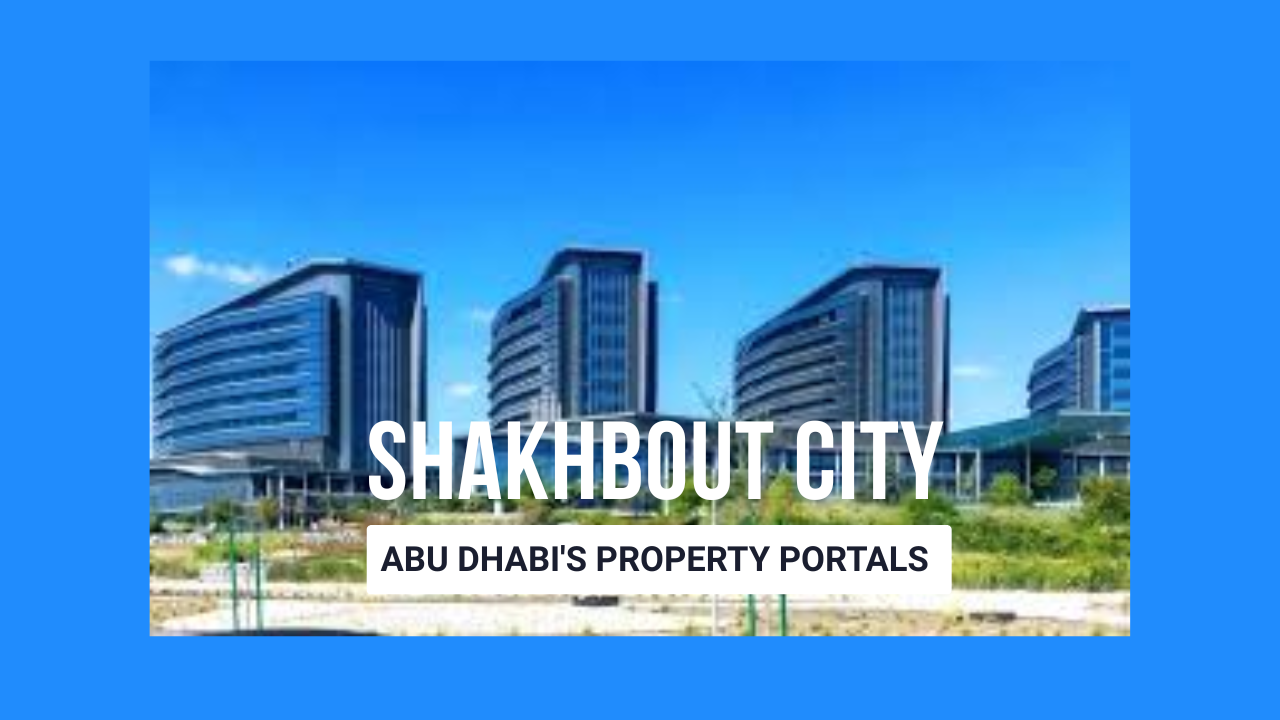

Most people searching for a home in Abu Dhabi stumble across Shakhbout City after ruling out everywhere else — too expensive on Yas Island, too crowded near the Corniche, too remote in the outskirts. Then they find Shakhbout City, and a lot of them stay. This guide doesn’t just list what’s there. It explains what it actually means to live there, invest there, or move a family there in 2026.
- What Is Shakhbout City — and Why the Name Change Matters
- The Real Property Picture in Shakhbout City
- Getting Around: The Transport Reality
- Schools and Education: A Genuine Strength
- Healthcare: Sheikh Shakhbout Medical City Is a Significant Asset
- Daily Life: Shopping, Dining, and What’s Actually There
- Who Actually Lives in Shakhbout City
- Investment Perspective: Why the Numbers Are Worth Watching
- Shakhbout City vs. Nearby Alternatives: An Honest Comparison
- Practical Notes for Anyone Considering a Move
- Final Assessment
- Frequently Asked Questions
What Is Shakhbout City — and Why the Name Change Matters
Shakhbout City was formerly known as Khalifa City B. The rename isn’t cosmetic — it signals the community’s evolution from an overflow suburb into a recognised residential district with its own identity. Named after Sheikh Shakhbout bin Sultan Al Nahyan, the area now carries the weight of that legacy in its infrastructure ambitions, most visibly in the Sheikh Shakhbout Medical City that anchors the community’s healthcare offering.
Situated roughly 30 kilometres from Abu Dhabi Island, Shakhbout City sits to the northeast of Mohammed Bin Zayed City and just south of Abu Dhabi International Airport. That position — inland, quiet, grid-planned — is either a feature or a drawback depending entirely on your lifestyle. For families who don’t need to be near the waterfront every evening, it’s practical in a way that more glamorous neighbourhoods simply aren’t.
The community shares borders with Baniyas, Al Shawamekh, and Zayed City. Khalifa City A (the more established sibling) is a short drive away, and Dubai is reachable in under an hour via the Abu Dhabi–Ghweifat International Highway. If your life involves frequent inter-emirate travel, that matters considerably.
The Real Property Picture in Shakhbout City
Every area guide will tell you Shakhbout City is “affordable.” What they rarely do is put numbers to that claim in a way that’s actually useful for decision-making.
Rental breakdown as of 2026:
- Studio apartments: from around AED 25,000–35,000 annually
- 1-bedroom apartments: approximately AED 40,000 per year
- 2-bedroom apartments: AED 50,000–65,000 annually
- 3-bedroom villas: starting around AED 75,000–120,000 per year
- 4–5 bedroom villas: AED 125,000–160,000 annually
- Larger luxury villas (10–11 bedrooms): AED 270,000–430,000
For context, the UAE country average monthly rent sits around AED 21,000. Shakhbout City’s average monthly figure hovers near AED 4,000 — a striking difference that drives a lot of the demand.
For buyers, apartment prices range from AED 1 million to AED 1.5 million. Villas span a wide band: AED 5.6 million to AED 8.5 million depending on size and compound quality. Return on investment is particularly strong for 3-bedroom units, where ROI reaches approximately 21.48% — one of the higher figures in Abu Dhabi’s suburban market.
Rental prices have been trending upward — a 7% increase in asking rents over recent periods — which reflects growing demand rather than speculative inflation. For tenants already in Shakhbout City, that’s a consideration when lease renewals come around. For investors, it’s a signal.
What separates Shakhbout City from cheaper suburban alternatives is what you actually get for the price. Properties regularly include private gardens, covered parking, maid’s rooms, and access to shared pools. Average property size runs around 4,500 square feet, with some units reaching 15,000 square feet. Compared to what AED 120,000 per year buys elsewhere in Abu Dhabi, that’s genuinely good value.
Getting Around: The Transport Reality
Here’s where most area guides give you a rosier picture than the truth warrants. Shakhbout City is well-connected to major highways — the E10 and E20 — but it is, fundamentally, a car-dependent community. If you work near the Abu Dhabi Corniche, expect a 25–45 minute commute under normal conditions, which can stretch considerably during morning rush hour.
Public transport options exist — bus routes 155 and 210 connect the community to various parts of Abu Dhabi — but the frequency and coverage don’t yet match what denser urban areas offer. Route 155 runs from Sultan Bin Zayed Street through 44 stops before terminating at Abu Rabuh Saeed Mosque. It serves the community, but residents without vehicles often find it limiting.
The silver lining is Abu Dhabi International Airport, which is just 15–20 minutes away. For frequent business travellers or families with one parent working abroad, that proximity changes the calculus on commute stress considerably. Taxis and car rental services operate widely throughout the area.
Schools and Education: A Genuine Strength
This is one area where Shakhbout City genuinely delivers. The education landscape in and around the community is strong enough to be a primary reason families choose it.
Notable institutions near Shakhbout City include The American International School in Abu Dhabi (AISA) and The Pearl Primary School, alongside a cluster of nurseries and schools offering British, American, and CBSE curricula. The range of educational options means families don’t have to compromise on curriculum preference to get affordable housing — a tradeoff that’s common elsewhere in Abu Dhabi’s suburbs.
For families with young children, having reputable schools within a short drive without the premium that attaches to school-adjacent properties on Yas Island or Saadiyat makes Shakhbout City particularly appealing. The community’s master plan also accounts for continued educational development as the population grows.
Healthcare: Sheikh Shakhbout Medical City Is a Significant Asset
The presence of Sheikh Shakhbout Medical City within the community is not a minor footnote — it’s a major factor in why Shakhbout City attracts long-term residents rather than transient renters. The hospital operates across nine departments and 29 divisions, providing comprehensive specialist care that would typically require a trip to Abu Dhabi Island in other suburban contexts.
For families, elderly residents, or anyone managing a chronic condition, having tertiary healthcare within the neighbourhood removes one of the central anxieties of suburban living. Many communities at this price point require residents to travel 30–40 minutes for anything beyond a GP appointment. Shakhbout City doesn’t.
Daily Life: Shopping, Dining, and What’s Actually There
Shakhbout City is still developing in parts, and it’s worth being honest about what that means. The dining and retail scene is functional rather than vibrant. Local supermarkets, convenience stores, and community-level retail cover daily needs. The neighbourhood is not, at this stage, a destination for restaurants or weekend entertainment.
What it offers instead is proximity. Mohammed Bin Zayed City hosts hospitals, supermarkets, and schools. Yas Island — with its theme parks, mall, dining strip, and leisure infrastructure — is within easy driving distance. The famous Yas Mall is roughly 20 minutes away. For residents who want suburban quiet at home and urban access on weekends, Shakhbout City sits in a reasonable middle ground.
The Millennium Central Mafraq Hotel is the community’s most notable hospitality anchor — a 4-star property with 242 rooms and suites that also serves as a useful reference point for visiting family or short-term guests.
Parks, children’s play areas, and community green spaces exist within compounds and are being expanded as part of the area’s ongoing development. The master plan includes 323 additional UAE National housing plots and a district park.
Who Actually Lives in Shakhbout City
The community’s demographic is genuinely mixed. Residents come from South Asian, Arab, and Western backgrounds, with a strong expat presence alongside Emirati nationals. That multicultural composition creates a functional, low-friction community dynamic that not every Abu Dhabi neighbourhood manages.
The area skews toward families and long-term residents rather than young professionals chasing nightlife or social proximity. If you have children, value space over scene, and aren’t prepared to pay Khalifa City A prices or Saadiyat premiums, Shakhbout City is the kind of place that earns quiet loyalty from residents who stay for years.
That said, it’s not for everyone. People who need walkability, a dense social scene, or easy access to the Corniche will find the distance frustrating. The grid-planned street layout, while practical, lacks the visual character of older Abu Dhabi neighbourhoods. Architectural uniformity is part of the package — clean, well-maintained, and somewhat undifferentiated.
Investment Perspective: Why the Numbers Are Worth Watching
Shakhbout City is at an interesting inflection point. It’s past the raw development stage — infrastructure is in place, schools are established, Sheikh Shakhbout Medical City is operational — but it hasn’t yet seen the price appreciation that typically follows when a suburb reaches critical mass. That gap is where investment opportunity tends to sit.
The 21.48% ROI on 3-bedroom units is exceptional by UAE standards. Rising asking rents (+7% recent period) suggest demand is not softening. Bloom Living, a luxury residential development under construction within the community, signals developer confidence in the area’s trajectory. When premium developers begin launching projects in a suburb, it usually precedes a re-rating of the area’s value perception.
For investors looking at Abu Dhabi’s residential market, Shakhbout City offers the combination of current yield and future capital appreciation that more established areas like Al Reem Island or Saadiyat have already priced in.
Shakhbout City vs. Nearby Alternatives: An Honest Comparison
Searchers often weigh Shakhbout City against Khalifa City A, Mohammed Bin Zayed City, Zayed City, and Al Reef. Here’s the actual tradeoff structure:
vs. Khalifa City A — More established, slightly higher rents, more retail options, less available space. Shakhbout City wins on value per square foot.
vs. Mohammed Bin Zayed City — Similar price band, slightly more central. MBZ City has more commercial activity; Shakhbout City has Sheikh Shakhbout Medical City as a healthcare advantage.
vs. Al Reef — Al Reef is a compound-style community with stronger social infrastructure but less space and higher price per square foot. Shakhbout City offers larger properties at lower cost.
vs. Yas Island — Not a genuine comparison at the price level. Yas Island commands significant premiums for leisure access that Shakhbout City residents simply access on weekends.
Practical Notes for Anyone Considering a Move
A few things that don’t usually make it into glossy area guides:
Parking is largely sufficient — villas and compounds include covered parking, and visitor parking is designated throughout the community. This is not a given in many Abu Dhabi neighbourhoods.
Many properties in Shakhbout City are pet-friendly, which matters more than it might seem given how restricting pet policies can be in urban areas.
The community has a covered outdoor temperature challenge shared by all Abu Dhabi suburbs. Summers require air conditioning as a non-negotiable, and outdoor public life contracts significantly from June through September. This isn’t unique to Shakhbout City, but it’s worth factoring into expectations around walkability and outdoor space use.
Compound living within Shakhbout City offers shared pools, fitness centres, and children’s areas that partially offset the lack of public leisure infrastructure. The quality varies by compound, so viewing and comparison before signing is worth the effort.
Final Assessment
Shakhbout City won’t win awards for glamour. It won’t give you the seafront sunset of Al Reem Island or the curated lifestyle infrastructure of Saadiyat. What it does offer is something harder to find in Abu Dhabi’s property market: genuine space, real affordability, strong healthcare, decent schools, and a community that works — quietly, practically, reliably.
For families relocating to Abu Dhabi on a realistic budget, for investors looking at yield rather than prestige, and for long-term residents who’ve decided they’d rather have four bedrooms and a garden than a postcode, Shakhbout City deserves to be on the shortlist. Not as a compromise, but as a considered first choice.
Frequently Asked Questions
Is Shakhbout City the same as Khalifa City B?
Yes. Shakhbout City was formerly named Khalifa City B and the two names remain in use interchangeably, particularly among long-term residents.
How far is Shakhbout City from Abu Dhabi city centre?
Approximately 30 kilometres from Abu Dhabi Island. The drive to the Corniche typically takes 25–45 minutes depending on traffic conditions.
What is the average rent in Shakhbout City?
Average annual rent across property types is around AED 113,000–AED 200,000 depending on property size. Apartments start from around AED 25,000 annually for studios; villas begin around AED 75,000 for 3-bedroom units.
Is Shakhbout City good for families?
Yes, particularly due to the proximity of quality schools offering multiple curricula, the presence of Sheikh Shakhbout Medical City for healthcare, and spacious family-friendly villa compounds with private gardens and shared amenities.
What schools are near Shakhbout City?
The American International School in Abu Dhabi (AISA) and The Pearl Primary School are among the notable options. The area also has multiple nurseries and schools offering British, American, and Indian curricula.
Is Shakhbout City a good investment?
Based on current data, 3-bedroom villas show ROI around 21.48%, and rental demand has pushed asking prices up approximately 7% in recent periods. Developer activity including Bloom Living suggests continued growth.